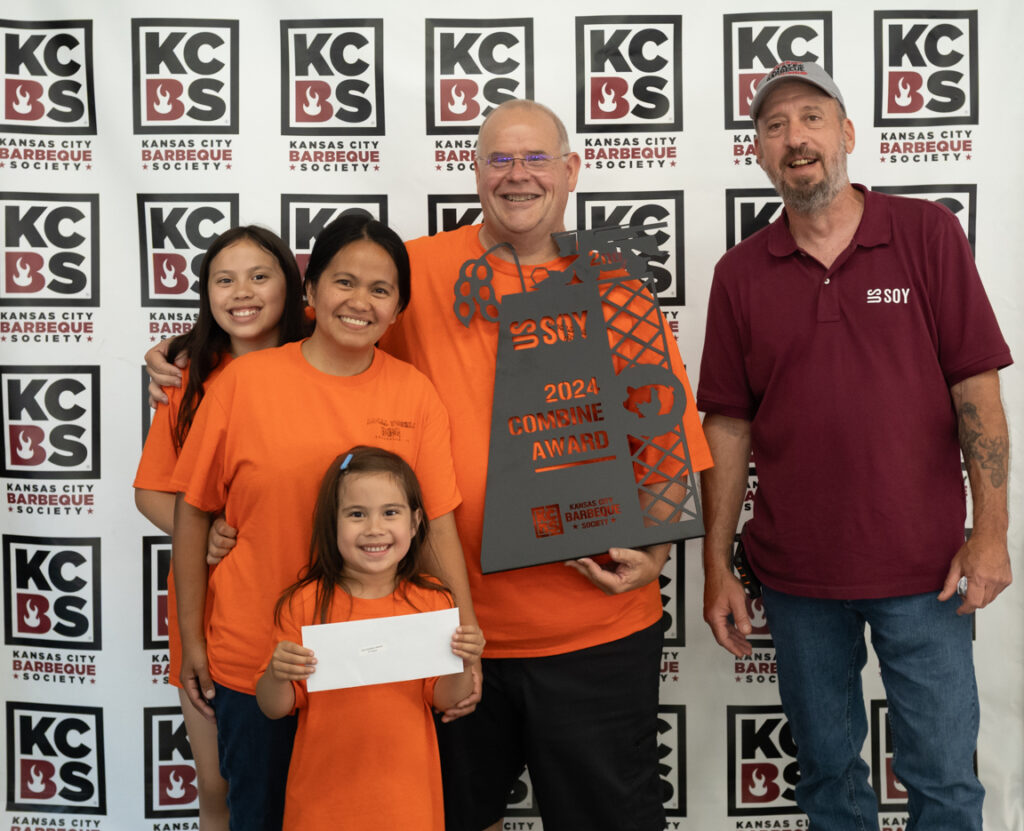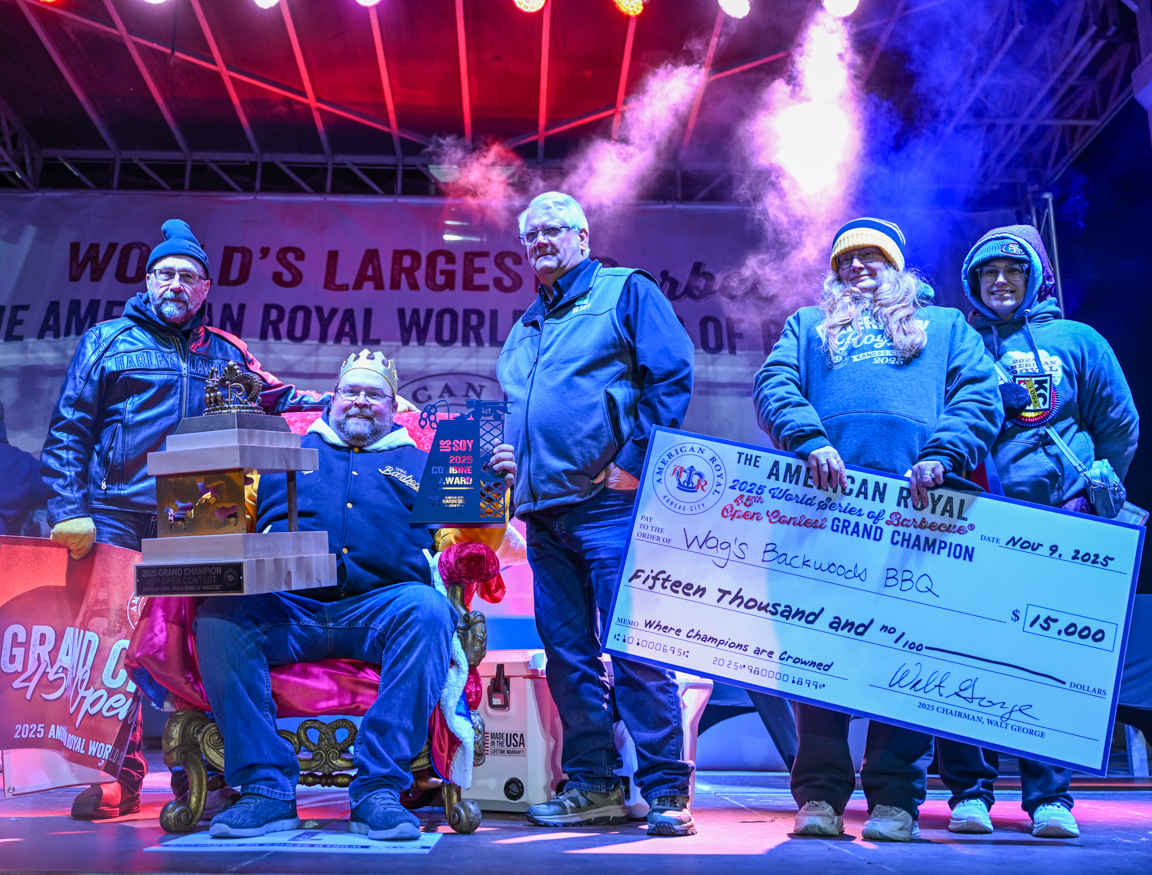

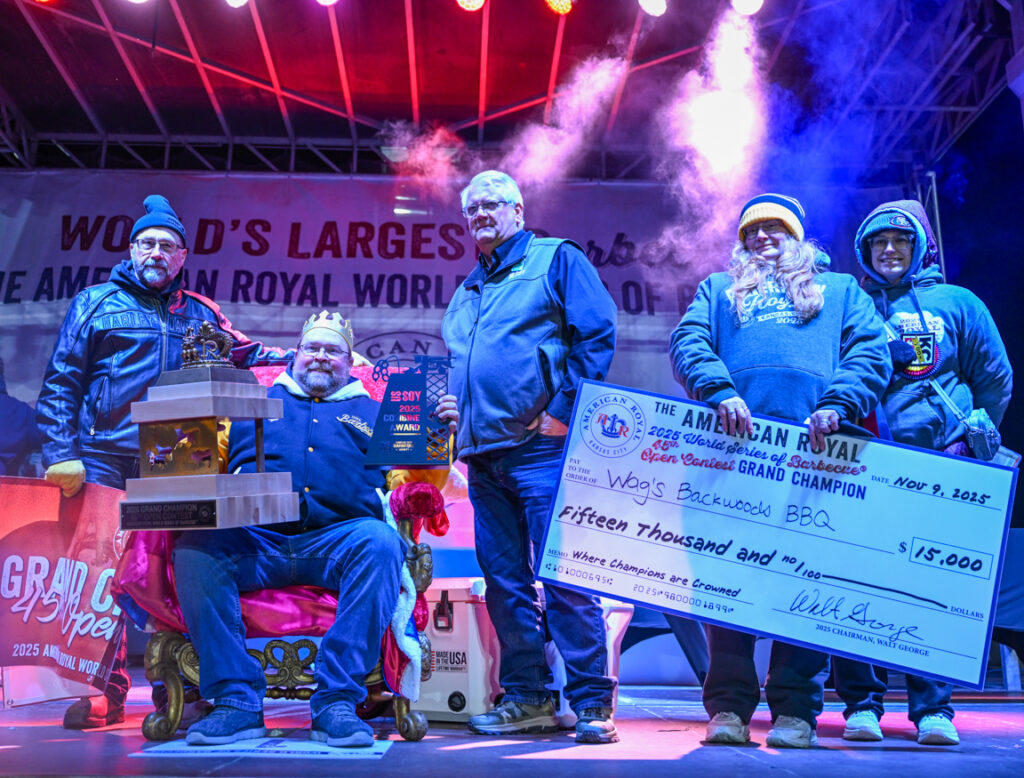
When Kansas soybean farmer Charles Atkinson took the stage at the American Royal World Series of Barbecue in Kansas City, he wasn’t there to hand out just another trophy. The award he carried represented something bigger.
It was the culmination of a three-year partnership between U.S. Soy and the Kansas City Barbecue Society (KCBS) that brought farmers directly to the people who use their product: the pitmasters turning high-quality animal protein into award-winning barbecue.
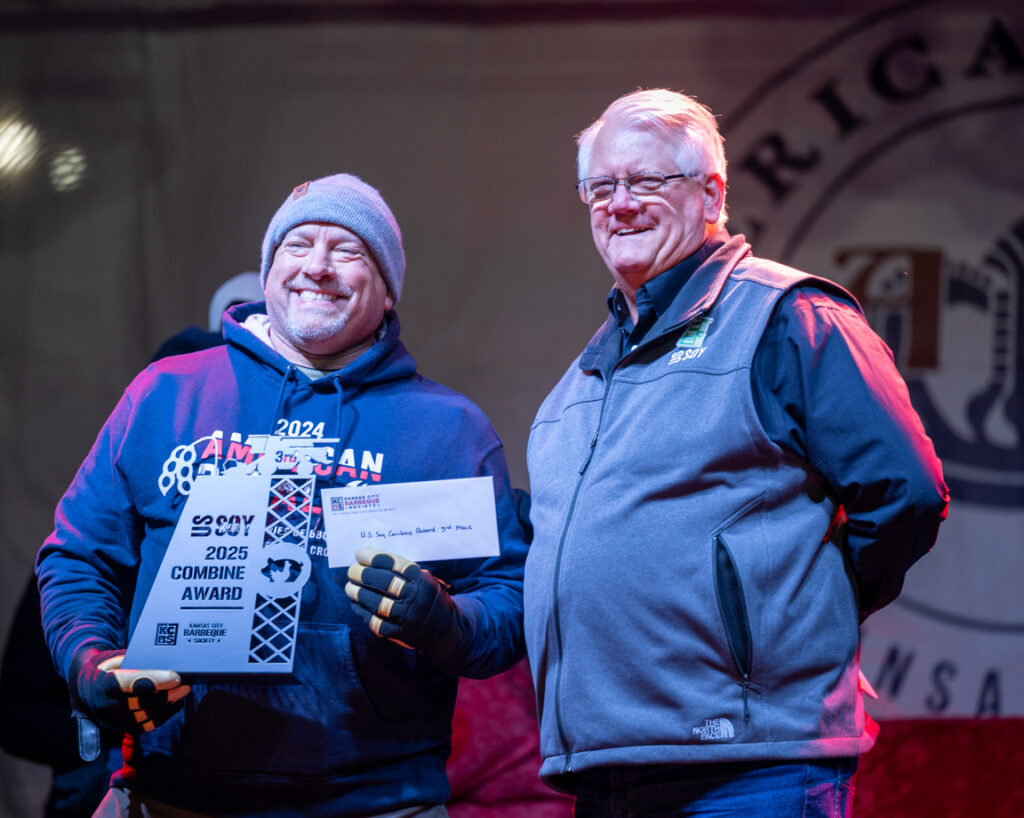
“For me, it was about helping promote our product to the people who actually use it. The end users,” Atkinson explained. Through six KCBS-sanctioned competitions in 2025, including major events like the American Royal, the KCBS World Invitational in Tennessee, and the Giant National Capital BBQ Battle in Washington, D.C., U.S. Soy created a unique bridge between agriculture and competitive barbecue.
The connection wasn’t immediately apparent to everyone. Patrick Giberson, a New Jersey soybean farmer leader, admitted he “wasn’t quite sure about it” in the beginning. But once he started talking to teams and judges, everything clicked.
“Our feed is feeding what you’re putting on that smoker,” Giberson told pitmasters. “It just kind of spirals from there. It’s that public awareness thing of not understanding where your actual food comes from. That there’s somebody else involved in this, and it’s a farmer.”
What surprised both farmers most was how eager barbecue enthusiasts were to learn. At the KCBS World Invitational in Tennessee, Giberson had people approaching him throughout the weekend. “We didn’t know any of this,” they told him. The conversations revealed a shared passion: pitmasters love their craft the same way farmers love working the land.
“They love what they do in this barbecue world,” Giberson said. “We love what we do as farmers. There’s a strong connection between us. We’re both passionate about it, and I think that realization was one of the biggest outcomes.”
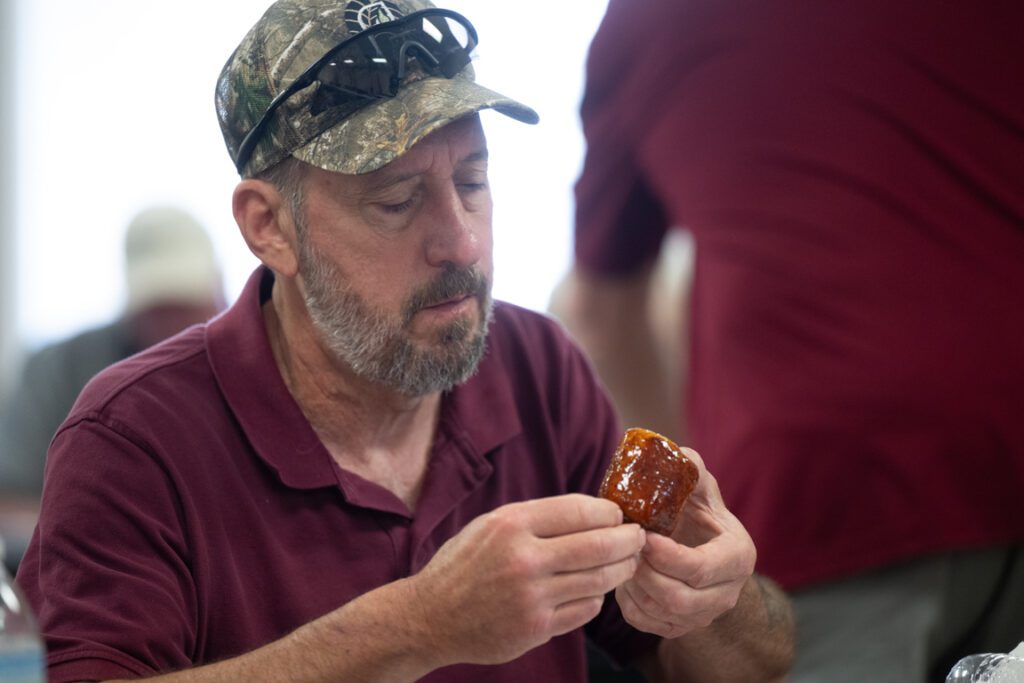
The discussions extended far beyond feed for poultry and swine. Atkinson found himself explaining the soybeans’ role in everything from Goodyear tires to firefighting foam. At the Royal, he was wearing Skechers shoes with Goodyear soles made with soybean oil, which sparked an unexpected connection with a judge he’d played golf with years earlier, that is now a regional tire distributor.
“He didn’t know about our connection with Goodyear,” Atkinson said. “After our conversation, he bought a pair of Skechers.”
He also invited Atkinson to speak at his next sales meeting about soybeans, sustainability, and the tire industry.
“You never know what doors are going to open when you’re there one-on-one talking to people,” he said.
Rod Gray, executive director of KCBS, saw the partnership’s value from the start. With an estimated 2,500 people at the Royal alone and thousands more at other events, the reach extended far beyond the competition grounds.
“It was a message that needed to be told,” Gray said. “The consumer public doesn’t necessarily understand the grain commodity market, and they don’t necessarily equate what livestock eat to what comes to their table.”

The partnership with KCBS created a simple but powerful program: three meat categories — pork, chicken and ribs — with awards going to the teams that cooked them best. The U.S. Soy Combine awards were straightforward and recognized excellence for Gray. As Atkinson stood on that stage at the Royal, teams came back after receiving their awards to shake his hand. “Hey, thank you for doing this special award,” they told him. “It’s really cool to be part of it.”
That gratitude represented something larger than prize money or trophies. It was recognition of a connection that many had never considered. A connection between soybean fields and the smokers producing championship barbecue.
Through face-to-face conversations, shared stories, and mutual respect for craftsmanship, farmers and pitmasters discovered they had more in common than they’d ever imagined.
“Being there one-on-one, you’re getting a more personal contact,” Giberson said. “Those people talk to other people, who talk to other people. It’s hard to measure how effective it really is, but it’s a great opportunity.”
An opportunity that, for three years, turned barbecue competitions into classrooms where the connection between field and flame became clear: one conversation, one handshake, one award ceremony at a time.