


05.21.2026
U.S. Soy Staff Writer

With unmatched versatility, U.S. Soy helps meet growing global demand for protein, energy, and sustainable products.
The soybean is roughly the size of a fingernail, yet it sits at the center of global food, feed, and fuel systems. Every little bean is a remarkably efficient package of protein, oil, and fiber that helps feed people, nourish livestock and power transportation worldwide.
From livestock feed troughs to renewable diesel tanks, demand for U.S. Soy continues to expand. And U.S. soybean farmers are sustainably producing more of it with greater precision and efficiency.
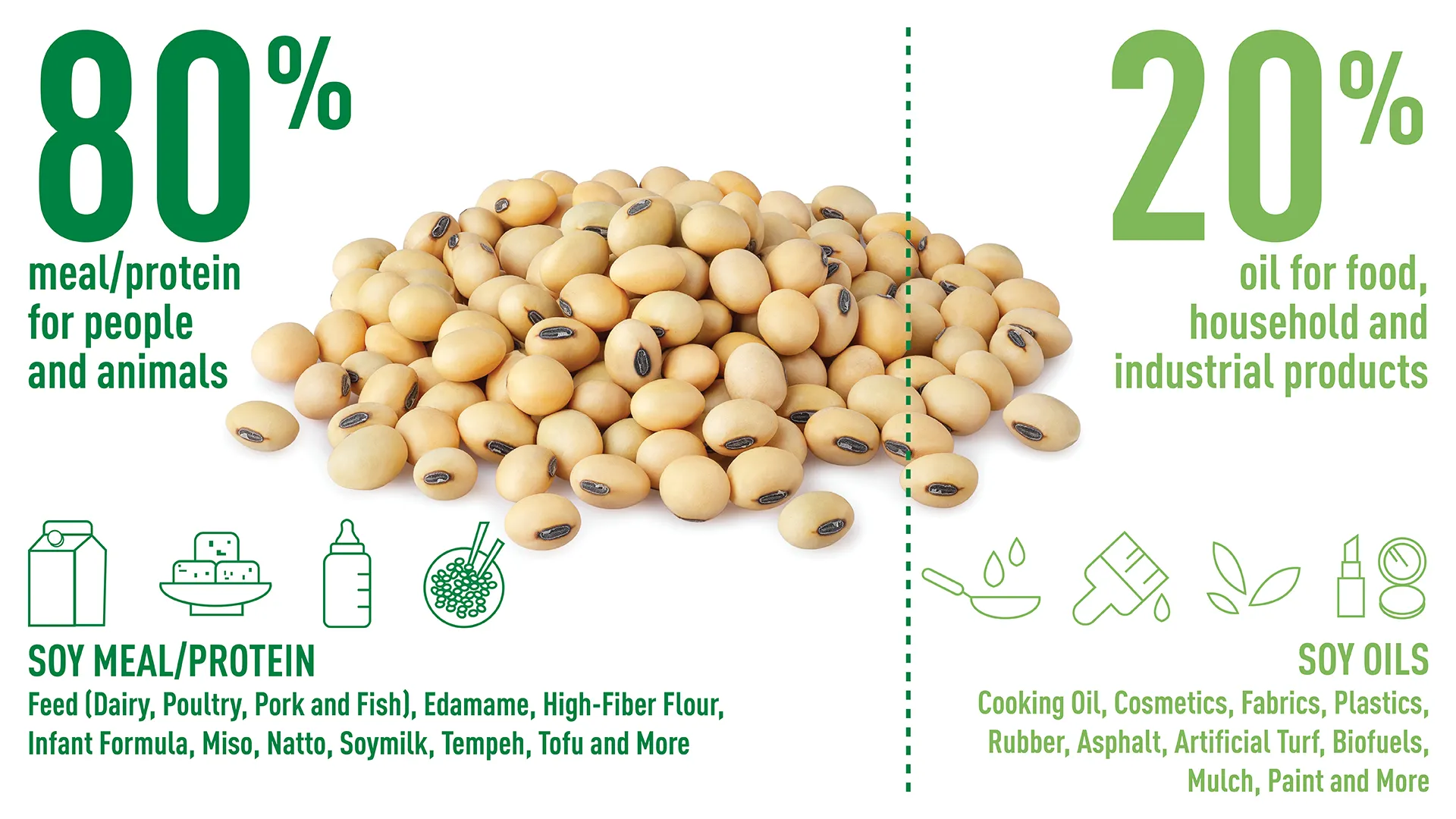
When soybeans are processed, very little goes to waste. During crushing, beans are cleaned, cracked, heated and separated into two primary components: oil and meal. Roughly 20% of the soybean becomes oil used in cooking, food manufacturing, and renewable fuels. The remaining 80% becomes high-protein soybean meal, one of the world’s most efficient feed ingredients for poultry, swine, dairy cattle, and aquaculture.
Meeting a growing world’s needs
As global demand for protein and lower-carbon energy rises, U.S. Soy is scaling up to meet the need.
USDA’s Economic Research Service projects domestic soybean crush will reach a record 2.75 billion bushels in the 2026/27 marketing year, driven by stronger demand for both soybean meal and soybean oil. ¹
New soybean processing facilities are coming online in Iowa, Kansas, Nebraska, North Dakota, Ohio, and Wisconsin, helping move more soybean meal and oil into domestic and international supply chains. These facilities allow soybeans to be processed closer to where they are grown while strengthening markets for farmers and end users alike. ²
Soybean oil is also becoming increasingly important in renewable fuel markets as transportation sectors look for lower-carbon alternatives. More than half of U.S. soybean oil production is expected to be used for biofuels during the 2025/26 marketing year. ³
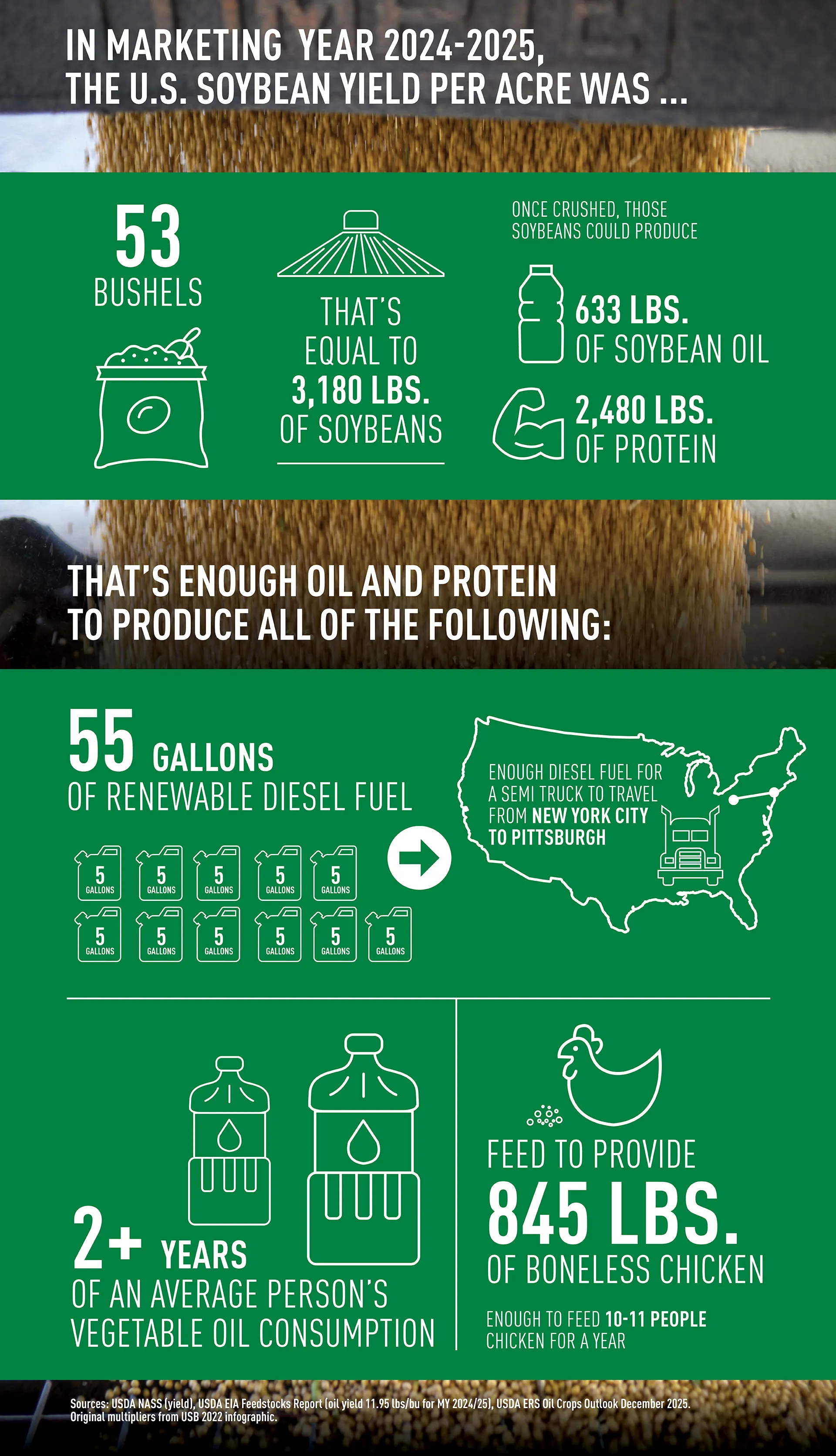
Farmers are producing more soybeans on roughly the same amount of land. Conservation tillage, cover crops and precision agriculture are now widely used on U.S. soybean acres, reducing soil disturbance and improving input efficiency.⁴ The result is a soybean crop that delivers more protein, more food ingredients and more renewable energy while improving efficiency across the supply chain.
Demand for biofuels has limited impact on food prices
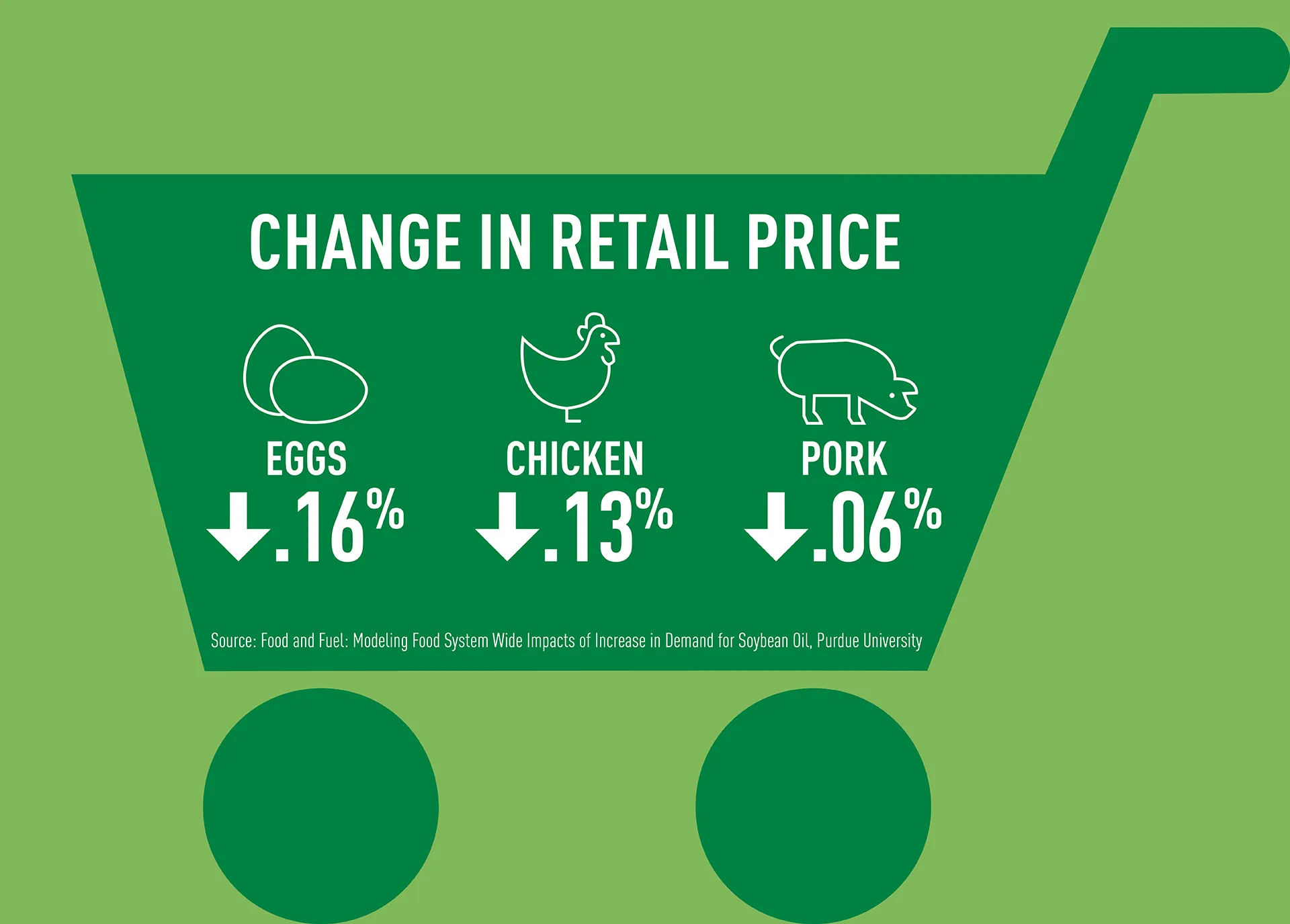
Critics sometimes claim that expanding renewable fuel production competes with food production. The evidence shows otherwise. A Purdue University analysis found that rising soybean oil demand for biomass-based diesel has little net effect on overall food price inflation. In fact, stronger oil demand often expands soybean meal supplies, lowering feed costs for livestock producers and helping stabilize prices for eggs, chicken, and pork.
As demand grows across food, feed and fuel markets, U.S. Soy delivers on all fronts. Sustainable practices, strong partnerships and continued innovation keep U.S. soybeans nourishing people, powering industries and supporting the planet.

References
¹U.S. Department of Agriculture Economic Research Service, “Oil Crops Outlook: January 2026,” accessed May 13, 2026, USDA ERS Soybeans and Oil Crops Market Outlook
²U.S. Department of Agriculture Economic Research Service, “Record soybean crush forecast for 2025/26,” Charts of Note, accessed May 13, 2026, https://www.ers.usda.gov/data-products/charts-of-note/chart-detail?chartId=112861
³Reuters, “Biofuel demand to soak up more than half of U.S. soyoil production next year, USDA says,” July 11, 2025, Reuters biofuel demand and soybean oil report
⁴Vaiknoras, K., and T. Hubbs. Characteristics and Trends of U.S. Soybean Production Practices, Costs, and Returns Since 2002. USDA Economic Research Service, 2023. https://www.ers.usda.gov/publications/pub-details?pubid=106620

U.S. Soy Staff Writer
U.S. Soy provides a sustainable alternate protein, that allows our farmers to grow their businesses and feeds countless families around the world.