08.19.2025
Joseph L. Murphy
As the Major League Baseball season reaches its peak, thousands of Americans will head to ballparks to celebrate America’s pastime. While fans whistle “Take Me Out to the Ball Game” as they enter Fenway Park, they might be surprised to learn that soybeans are part of the experience, right alongside peanuts and Cracker Jack.
That’s because the artificial turf lining the Red Sox dugout and players tunnel is backed with SYNLawn’s EnviroLoc+, a proprietary multi-layer system infused with soybean oil. This bio-based material, developed by Sport Group Holding—the parent company of SYNLawn—enhances both durability and aesthetic appeal while extending the turf’s lifespan through Boston’s varied seasons. It’s one of many innovative products that use soybeans grown in farm fields across the country.
“What you see here is the example of the good work that we’ve put in over decades to connect with architects, landscape architects and designers to build something amazing,” said Rob Dant of SYNLawn.
SYNLawn’s artificial grass is made with a soy-based backing called EnviroLoc, which uses polyol technology derived from U.S. soybean oil that is widely available and rapidly renewable. Its use of soybean oil displaces 60 percent of the petroleum-based polyurethane.
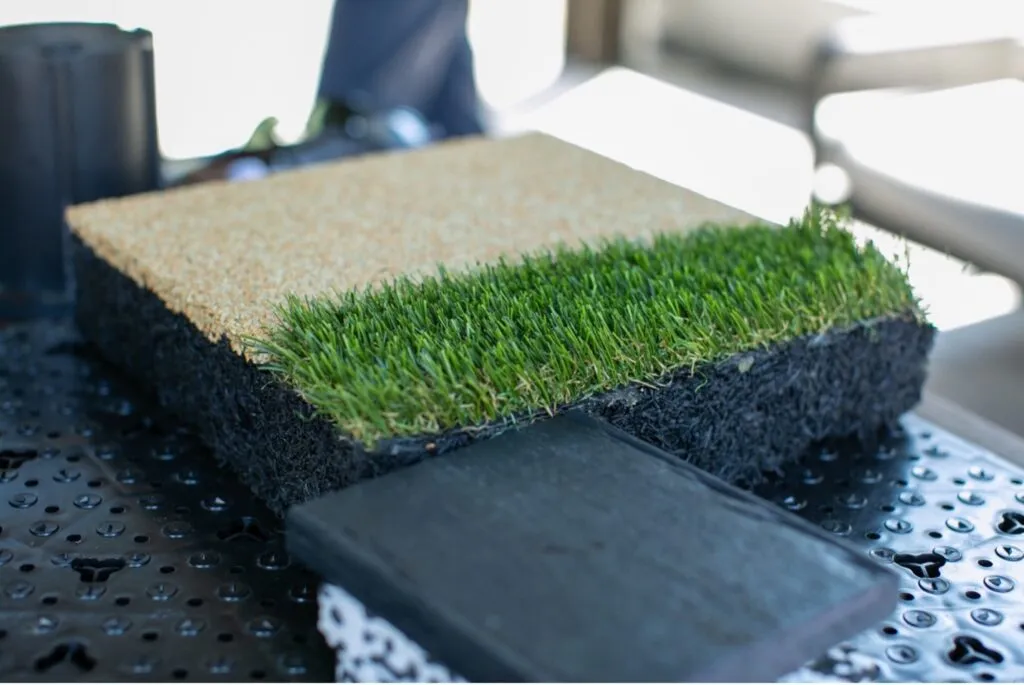
SYNLawn is manufactured in a 375,000-square-foot facility in Dalton, Ga. This state-of-the-art plant produces SYNLawn’s bio-based products using soy, along with other recycled materials. Its 2025 product line includes multiple USDA-certified bio-based turf systems. Since 2008, SYNLawn has installed more than 82 million square feet of soy-backed turf across over 200,000 projects in 19 countries.
Bio-based products are experiencing significant growth in the U.S. According to USDA figures, in 2021 the bio-based sector contributed nearly $489 billion to the U.S. economy, supporting approximately 4 million jobs. Using soybean oil also helps reduce reliance on petroleum and cuts greenhouse gas emissions.
At Fenway Park, soybean oil adds new meaning to America’s pastime. With soy-infused backing produced in Georgia, a classic ballpark tradition intersects with modern ag innovation—offering sustainability, performance and a field that’s green in more ways than one.
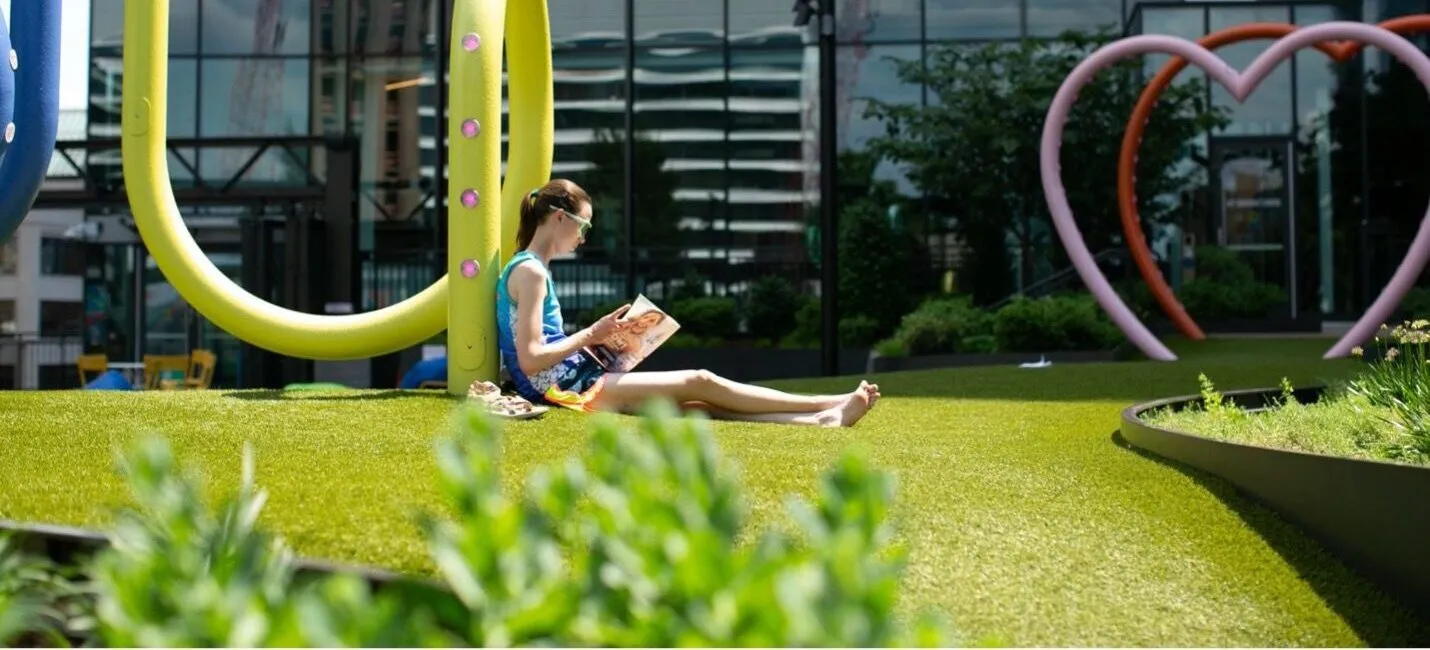
A few miles from Fenway, on a rooftop in Cambridge, farmer-leaders who grow thousands of acres of soybeans recently explored a green space also built using SYNLawn. They saw for themselves one of the novel uses for the soybeans they grow. The Urban Park (Up) Roof Garden is a public space that features SYNLawn across a playground, pickleball courts, vendor areas and several raised community gardens.
“It was great to see a public space in Boston that could’ve used soybeans grown in one of my fields,” said Matt Gast, a farmer-leader from North Dakota. “Animal agriculture is the number one customer of soy, but during these tough economic times, any extra use or demand we can get for our soybeans is added value to producers’ bottom line. So anytime we can show the benefits of soy and how it’s changing lives is a good thing.”
Because of the potential for bio-based products to create new markets for soybeans, U.S. soybean farmers have invested millions of dollars to research, test and promote them. Much of this work is done through the United Soybean Board, composed of 77 U.S. soybean farmers appointed by the U.S. Secretary of Agriculture to invest soybean checkoff funds.
Joseph L. Murphy
USB Contractor, Director, Editorial Content
Joe Murphy is a photographer and writer focused on providing creative work.