12.18.2025
Sarah Maney
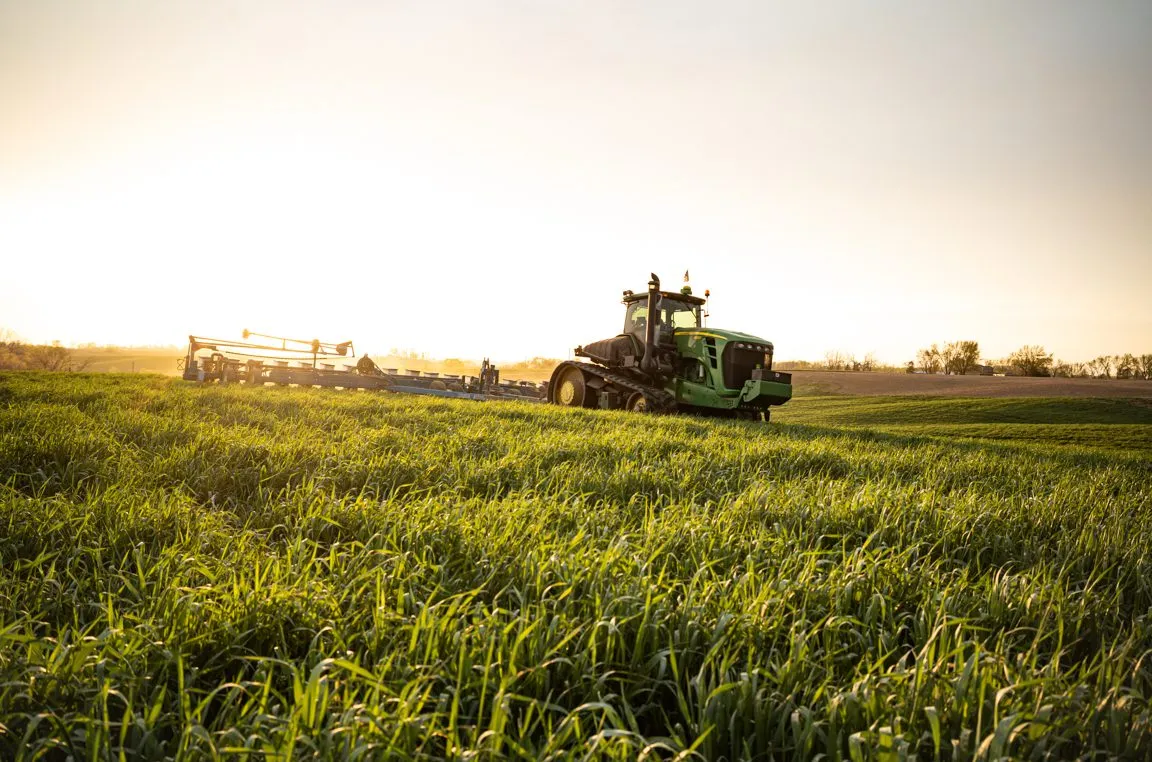
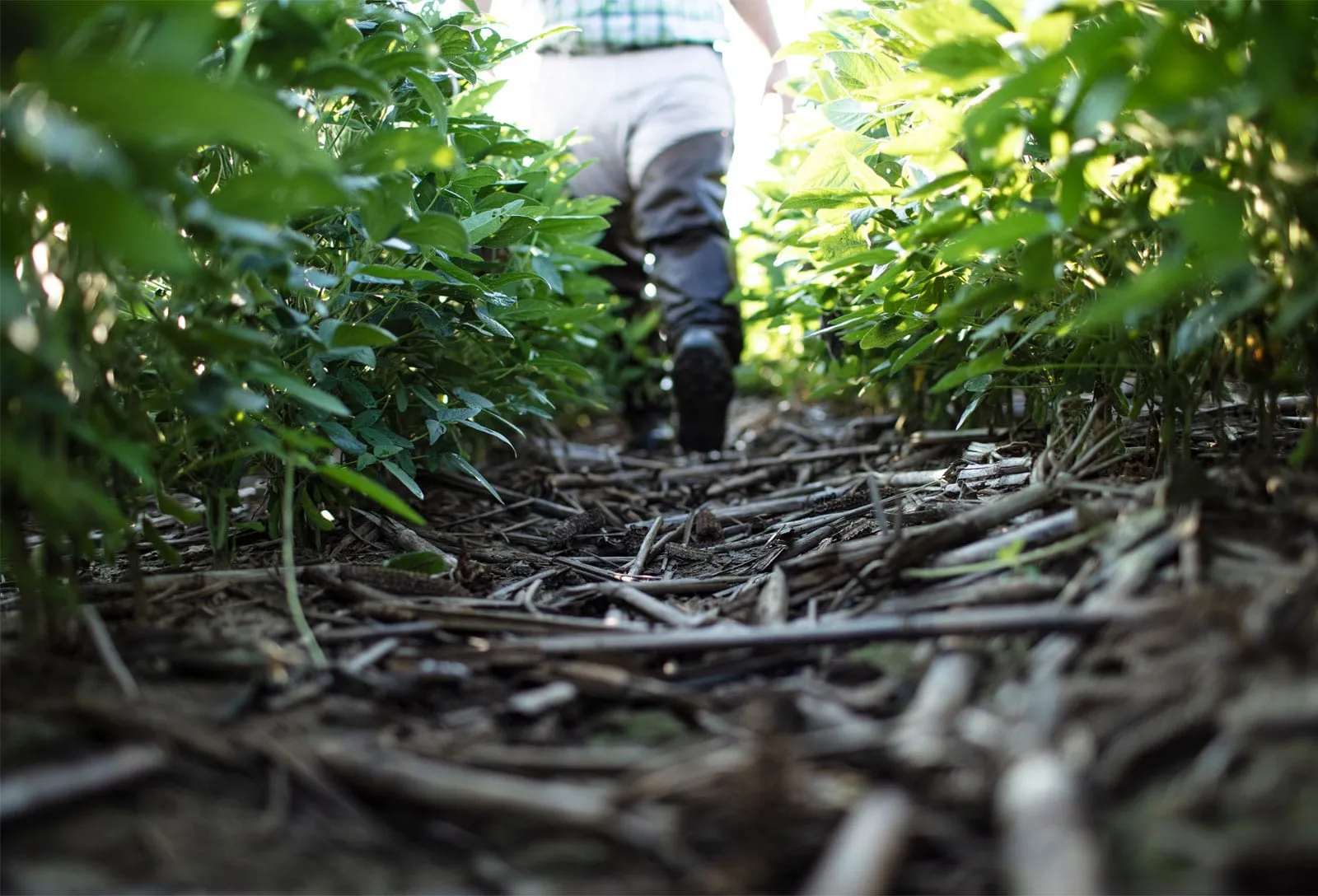
In 1907, when horses and mules still powered most American farms, Neal Bredehoeft’s grandparents purchased land near Alma, MO, which would become a century farm. Today, Neal and his brothers, Gene and Clark, still work that original acreage plus additional land the family has acquired over the years, using 30 years of no-till practices and a decade of cover crops to build soil health.
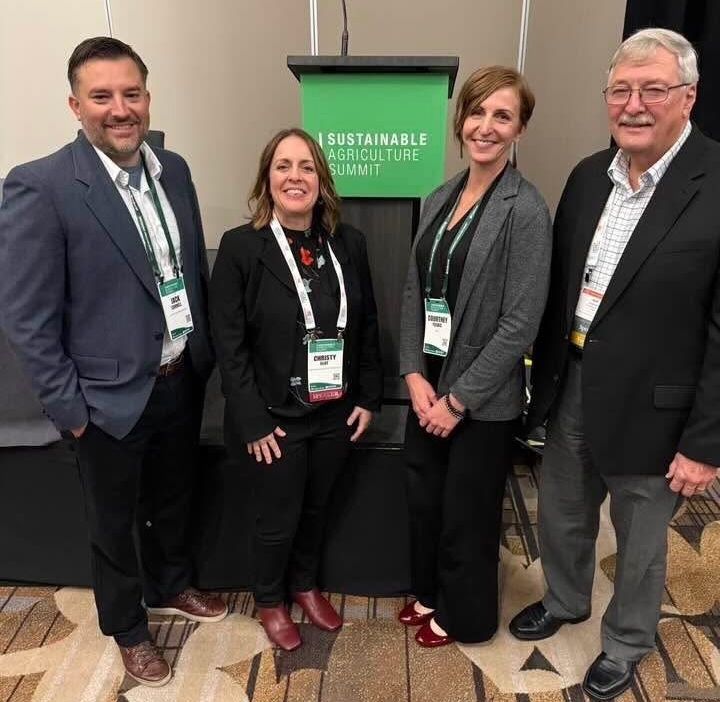
Like many conservation-minded farmers, Bredehoeft knows these practices require ongoing investment, and in today’s tight-margin environment, every dollar counts. As a United Soybean Board director, he has followed the development of the Farmers for Soil Health program, which aims to support farmers adopting conservation practices. At the recent Sustainable Agriculture Summit in Anaheim, CA, Bredehoeft joined a panel moderated by Jack Cornell, senior director of Supply Chain Resilience at USB, to explain how the Farmers for Soil Health marketplace is a win-win for farmers and food companies.
Cornell framed the issue during the panel discussion: many companies have set ambitious sustainability goals, but the connection between those corporate commitments and farmer income has been difficult to establish. The marketplace is designed to help close that gap. It’s slated to be open for business in 2026.
How the Marketplace Will Work
A food company or Consumer Packaged Goods (CPG) brand wants to buy verified environmental outcomes from a farm: carbon credits, regenerative acres, or water quality improvements that demonstrate measurable conservation results. Through the marketplace, the farmer gets a text message with their offer. The farmer can accept it, counter, or negotiate directly.
That control—negotiating directly without an intermediary—is what caught Bredehoeft’s attention. “That was the beauty of what I thought was a key part of that program,” he said.
Courtney Yuskis, who works with the technology provider for the marketplace, explained that the platform is ready now. “It’s meant to facilitate the trade of any desired outcome directly between a buyer and seller,” she said, adding that the goal is to eliminate margin multiplication that happens in traditional supply chains. By connecting farmers directly with companies, more money stays in farmers’ pockets.
Each state in the program has technical advisors, farmers and conservation experts who manage verification and documentation for both farmers and companies. For Bredehoeft, enrollment was simple. “Their technical advisors really helped me out quite a bit getting enrolled,” he said. “It really didn’t take very much time on my part, other than getting the maps to them and some of the cropping history on the farm.”
Why It Matters Right Now
The marketplace addresses a real challenge: conservation practices like cover crops and no-till farming are a transition period that takes time to pay off, but farmers need cash flow today.
For farmers already planting cover crops or utilizing a no-till approach, the marketplace represents additional income without additional work. When Cornell asked what an extra ten to twenty dollars per acre would mean, Bredehoeft’s answer was immediate. “At this point in time, the farm economy is pretty thin,” he said. “So, anything we can add to our farm operation from other sources is sure going to help out.”
Cornell pressed further: Would that additional funding lead to efficiency gains? Would Bredehoeft invest in equipment like a no-till drill to advance his conservation work?
“That’s pretty much a yes to that,” Bredehoeft said. “If you get a little extra cash, you try to put it where it is going to pay off the most. We have always looked at the soil conservation side, the minimum till, no-till side. That is where we need to spend our money to increase the soil health.”
Building the Next Century
The Bredehoeft farm has survived droughts, economic downturns, and dramatic shifts in how America produces food. It has endured because each generation found ways to make stewardship sustainable.
When Neal Bredehoeft’s grandparents bought their Missouri farmland in 1907, they could not have imagined the marketplace their grandson would help shape more than a century later.
The marketplace platform represents the same instinct for a new era. It’s not just about adding income streams or meeting corporate sustainability goals. It’s about creating infrastructure that makes conservation economically viable for the long haul so that farms can continue the work of building soil health without sacrificing the financial stability needed to stay in operation.
With this marketplace, farmers gain recognition not just for what they grow, but for what they preserve. And that recognition, backed by fair compensation negotiated on their own terms, might be what allows Neal’s grandchildren to celebrate their own century milestone someday.
Learn more by visiting farmersforsoilhealth.com.
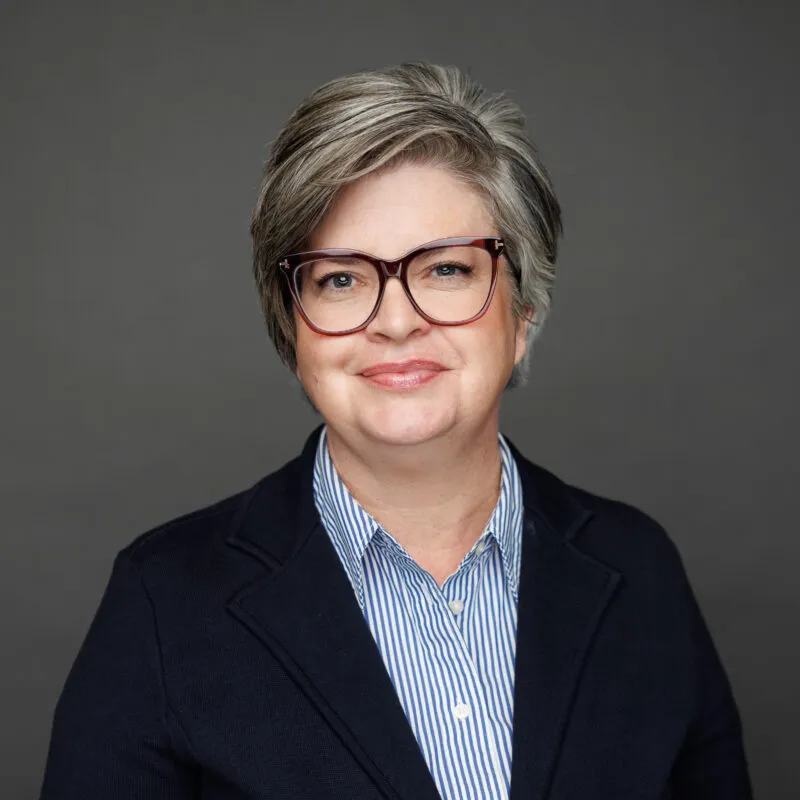
Sarah Maney
Communications Coordinator
U.S. Soy provides a sustainable alternate protein, that allows our farmers to grow their businesses and feeds countless families around the world.