





What are Seed Oils and Their Benefits?
Feeling confused about seed oils? You're not alone.
Most Americans now say they’ve seen food and nutrition-related content on social media. But it’s important to keep in mind that 60% of content creators admit to not fact-checking before posting, according to UNESCO. So it’s always helpful to fact check what you see on the socials.
Let’s clear the air and cut through the confusion, based on decades of credible, high-quality science.
Fact #1: Leading Health Experts Give Seed Oils a Thumbs Up
Major health organizations like the American Heart Association, the Academy of Nutrition and Dietetics, and World Health Organization as well as authoritative recommendations like the Dietary Guidelines for Americans highly recommend seed oils as good sources of fat. A recent study from the Journal of the American Medical Association (JAMA), published in the Harvard Review, found that higher intake of plant-based oils was associated with decreased risk of premature death.
Fact #2: Seed Oils Deliver Essential Nutrients
Seed oils, also referred to as vegetable oils or plant-based oils, are everyday cooking oils found in many kitchens and grocery stores. They bring a lot of good to the table, and here's why: they're rich in essential fats, including linoleic acid. Your body can’t produce linoleic acid on its own, but it’s vital for our bodies to function optimally and may support heart health. Adding seed oils into your diet is a heart-smart way to ensure you're getting enough of this beneficial, unsaturated fatty acid.
Fact #3: Seed Oils Do Not Contribute to Inflammation or Oxidative Stress
You might have come across claims that linoleic acid contributes to inflammation or oxidative stress, which is linked to cell damage. While anti-seed oil conversations often focus on these concerns, claims that seed oils cause inflammation oversimplify how our bodies process fats — and clinical research has shown that seed oils do not increase inflammation or oxidative stress. In population studies, higher intake is often associated with reduced, rather than increased, inflammation.
Ready to dive even deeper into what the research actually says about seed oils and their role in your diet? Let’s explore more.

Frequently Asked Questions About Seed Oils
Seed oils, like soybean oil, are oils that originate from plant seeds. They are an affordable and widely used pantry staple. They are primarily made up of unsaturated fatty acids and are relatively low in saturated fatty acids — and unsaturated fatty acids have been shown to help lower cholesterol, may improve blood pressure, and may lower your risk for heart disease.
The following oils are considered seed oils:
- Vegetable oil (aka Soybean oil)
- Canola oil
- Grapeseed oil
- Safflower oil
- Sunflower oil
- Corn oil
- Cottonseed oil
- Rice bran oil
Overwhelming scientific consensus confirms that seed oils offer significant health benefits.
Major health authorities, the American Heart Association and the Academy of Nutrition and Dietetics, actively recommend including seed oils as part of a healthy diet, particularly for their role in reducing bad cholesterol and benefiting cardiovascular health. They often suggest using them in place of solid fats, such as butter, lard, or coconut oil, which are higher in saturated fat.
Studies have also shown that consuming the linoleic acid found in seed oils, may help reduce the risk of developing serious health conditions like:
- Type 2 diabetes
- Heart disease
- Liver disease
- Dementia
Linoleic acid is an omega-6 polyunsaturated fatty acid (PUFA). It is considered essential because your body needs it but cannot produce it on its own. It's a key component found in many common seed oils, including sunflower, soybean and corn oil.
This vital nutrient plays a crucial role in maintaining cell membrane structure and supporting overall health, including heart health and skin integrity.
According to the American Heart Association, the recommended intake of linoleic acid is 5% to 10% of your daily caloric intake. Today, Americans consume about 8% of their total calories as linoleic acid — which is in line with recommendations.
The science shows seed oils don’t cause inflammation. This concern is an oversimplification of the science. Although the body converts linoleic acid into arachidonic acid (a fatty acid often criticized for promoting inflammation), research shows that this pathway is tightly regulated in humans. In other words, consuming linoleic acid does not automatically raise arachidonic acid levels.
Several meta-analyses find no rise in inflammatory biomarkers from higher linoleic acid intake. Population studies consistently show that higher intake of omega-6 fatty acids is associated with reduced inflammation.
The imbalance of free radicals (unstable molecules in the body) and antioxidants (substances that combat free radicals) is known as oxidative stress. Oxidative stress is linked to cellular damage in the body, and claims have been made that linoleic acid may increase oxidative stress.
In a peer-reviewed manuscript published in the British Journal of Nutrition, researchers analyzed randomized controlled trials (the gold standard of studies that examine causal relationships!) and showed no evidence that omega-6 linoleic acid caused an increase in oxidative stress.
There is no official consensus on the ratio at which we should consume omega-6 to omega-3 fatty acids. Instead, health organizations recommend focusing on consuming adequate amounts of each fatty acid – as they are both essential. That’s easy to do with seed oils like vegetable (soybean) oil and canola oil, which are a source of both omega-3 and omega-6 fatty acids.
Most seed oils are processed to make sure they’re safe, healthy, and affordable. Some ways to make seed oils involve using food-grade solvents like hexane (an organic compound) to efficiently extract the oils from the seeds. Hexane is meticulously removed post-use, resulting in pure, crude seed oil. As a final step, seed oils are deodorized to eliminate any unwanted colors, odors, or other environmental contaminants. Even after processing, seed oils are a good source of beneficial nutrients like vitamin E.
To reach even the most conservative safety limits for hexane, we would have to consume more than 100 times more oil each day than is currently the average!
Seed oils can also be extracted without the use of hexane. This is done through cold pressing plant seeds. However, cold-pressed seed oils have lower cooking smoke points, don’t last as long, and are typically more expensive.
While some health influencers promote beef tallow, a fat derived from beef, as an alternative, it's important to understand the nutritional differences.
Seed Oils
- Source: Derived from plants
- Fat Composition: Predominantly unsaturated fats, including linoleic acid, an essential polyunsaturated fatty acid (PUFA)
Beef Tallow
- Source: Derived from beef
- Fat Composition: High in saturated fat
While beef tallow is high in saturated fat, seed oils provide polyunsaturated fatty acids (PUFA) that fit within the American Heart Association (AHA)'s dietary recommendations. The AHA recommends aiming for a diet that achieves less than 6% of total calories from saturated fat. Substituting PUFAs can positively impact your cholesterol levels and support heart health.
Consider cooking with a seed oil with a high smoke point and a neutral flavor, like vegetable oil, which is great for high-heat cooking. Compared to other seed oils, refined soybean oil has a smoke point of approximately 450°F (230°C). Its mild taste allows it to blend in with a variety of dishes. It’s high in essential nutrients like Vitamin K. And it is a cost-effective option — in fact, if we replaced seed oils, the cost of fats and oils could go up by more than 7 billion dollars annually!
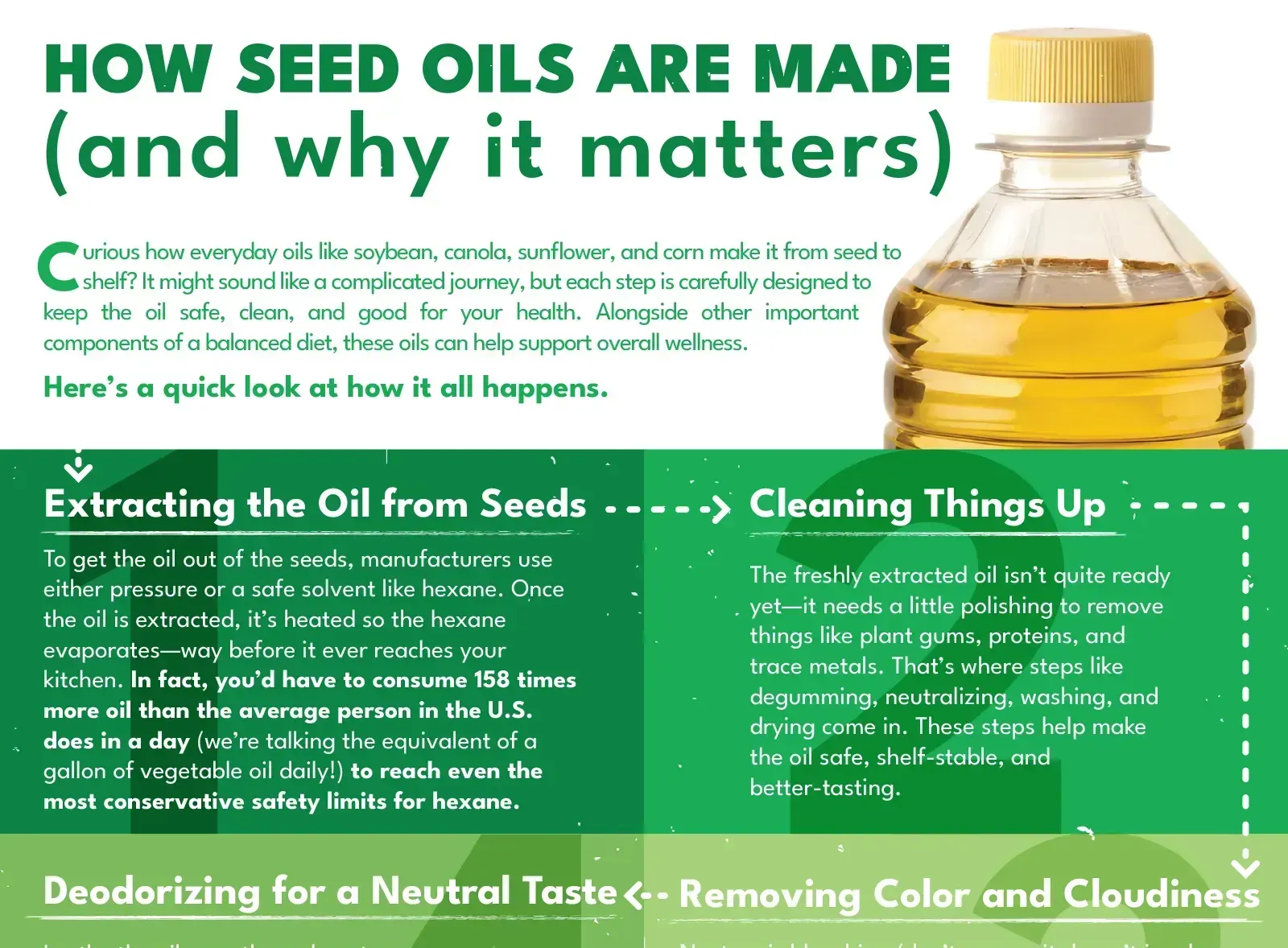
How Seed Oils Are Made and Why It Matters
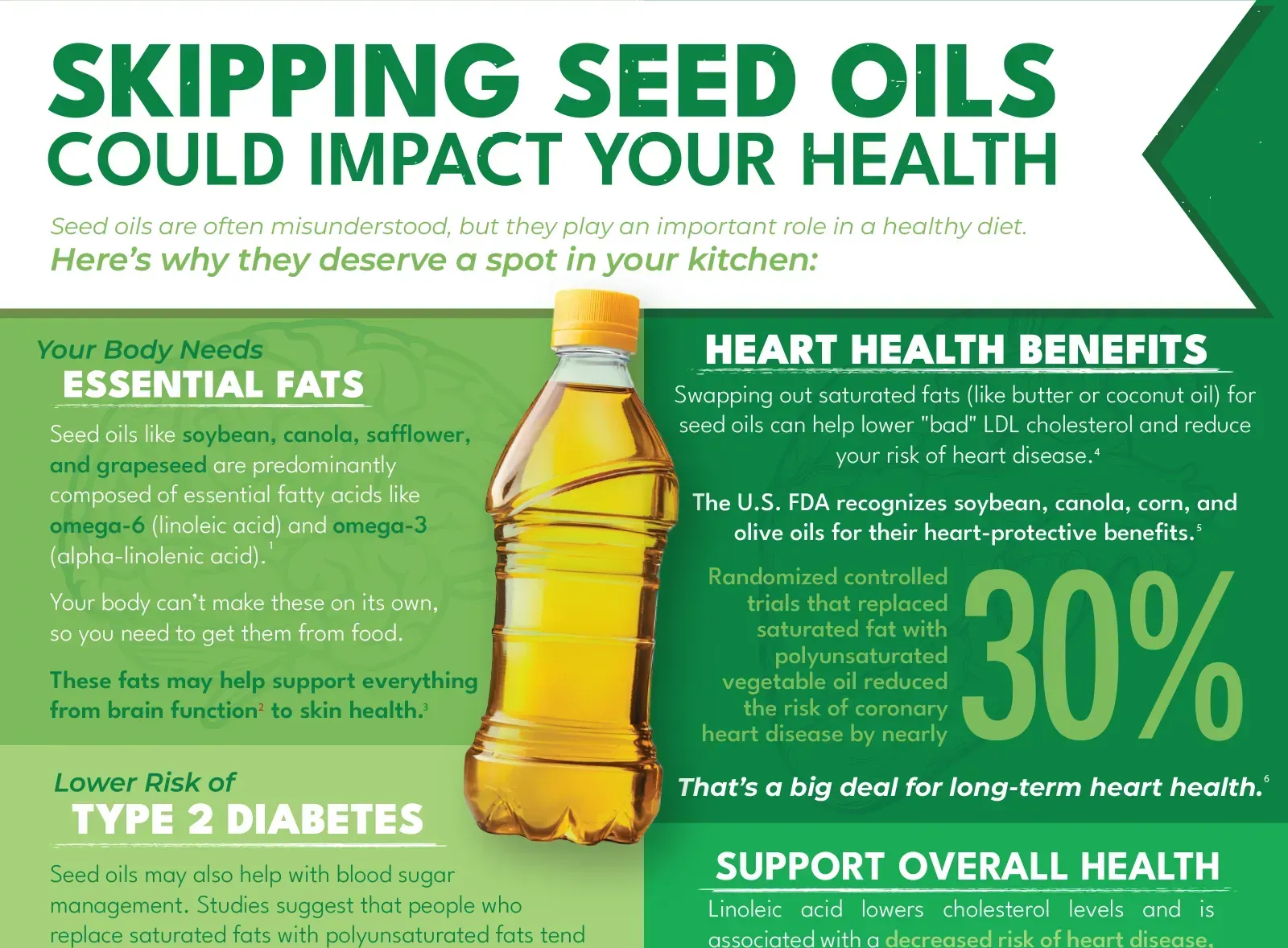
Skipping Seed Oils Could Impact Your Health
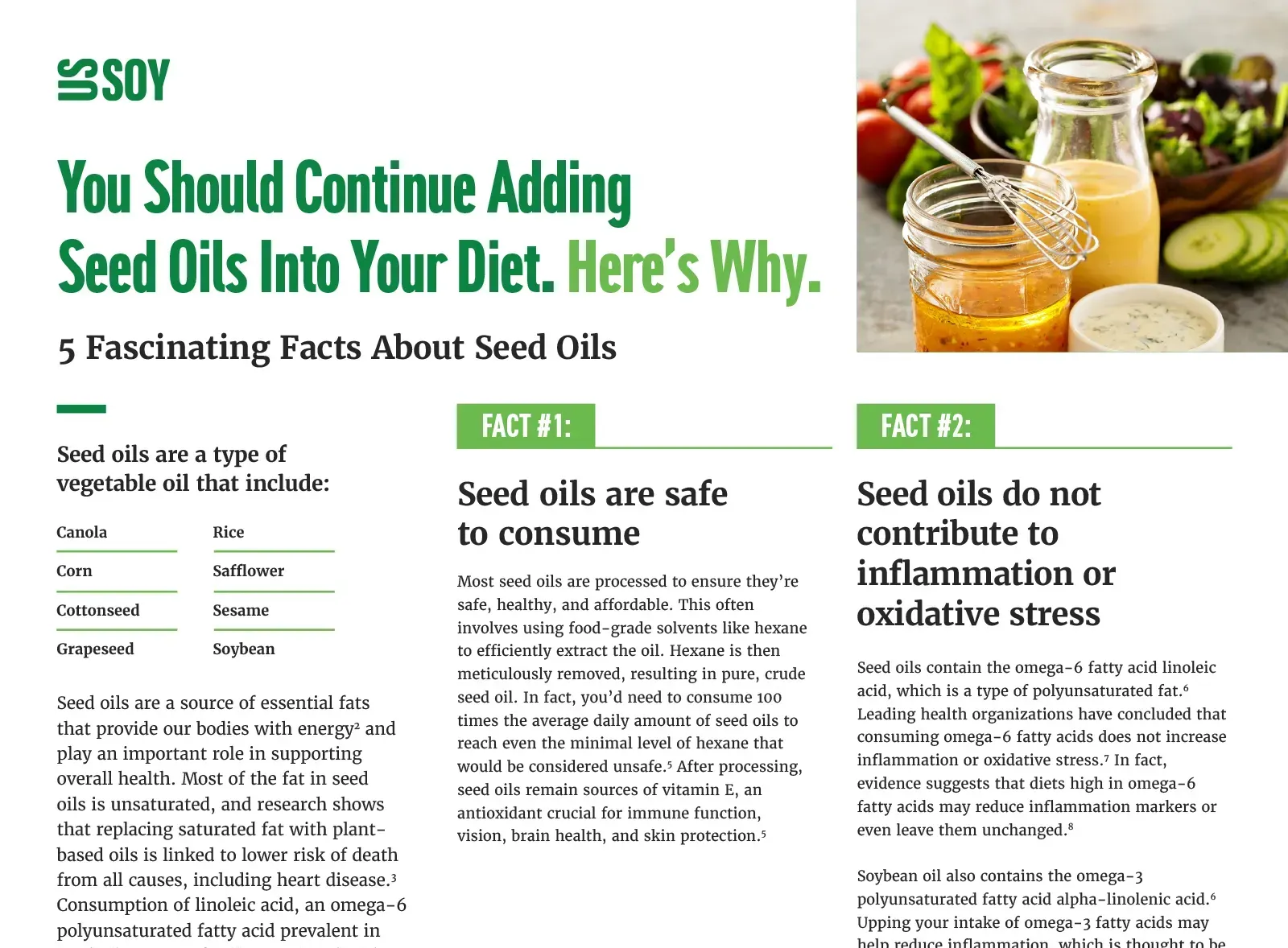
You Should Continue Adding Seed Oils Into Your Diet. Here’s Why.
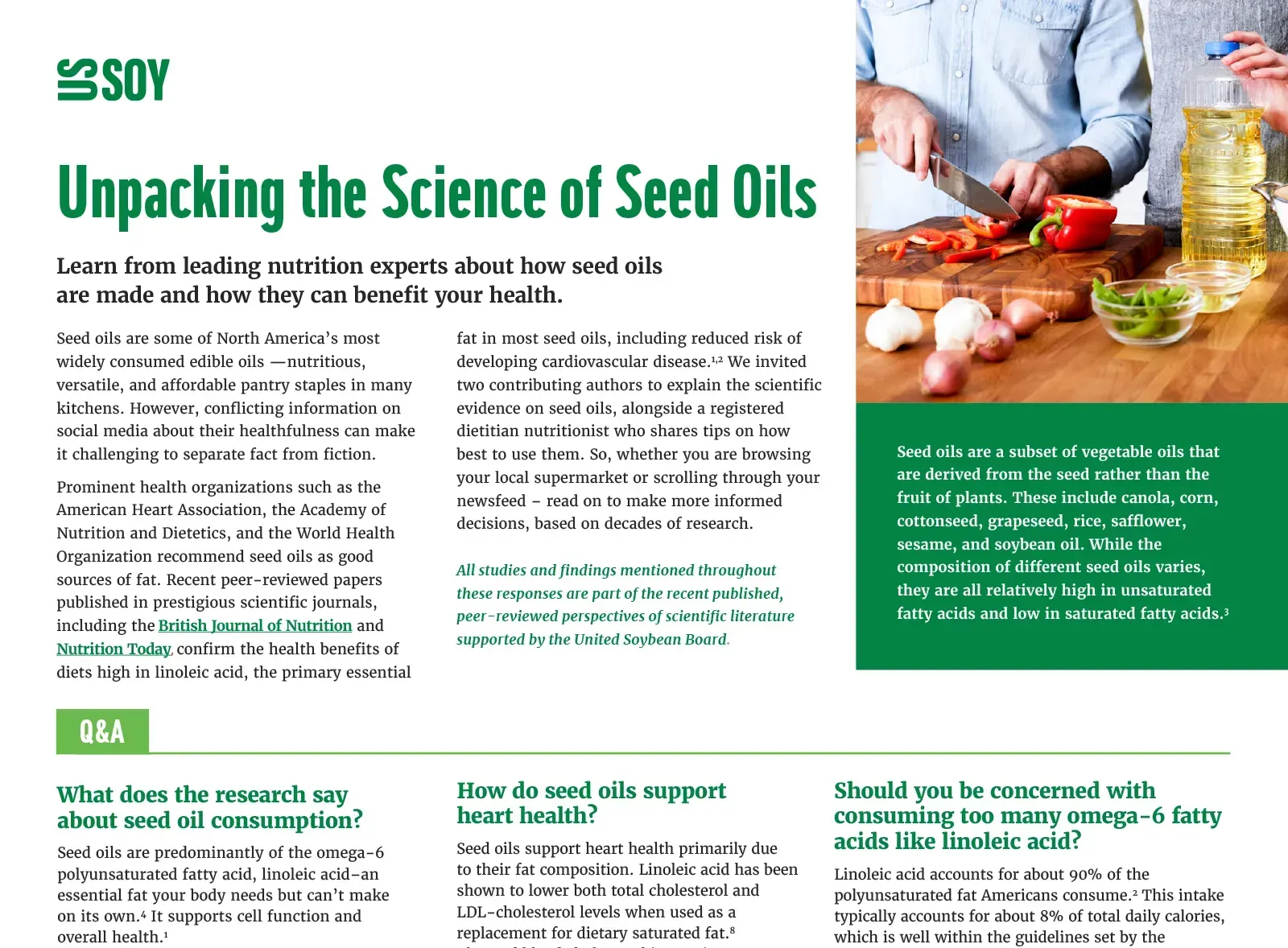
Unpacking the Science of Seed Oils

What Are Health Professionals Saying About Seed Oils?
Colleen Christensen, RDN
Colleen Christensen, RDN, is a dietitian who empowers people to ditch dieting and eat confidently. With evidence-based guidance and humor, she explains that seed oils are safe and can benefit heart health, noting their bad reputation often stems from misinformation and dietary confusion.
Josh New, MS, RDN, CSCS
Josh New, MS, RDN, CSCS, is a dietitian, fitness coach, and Certified Strength and Conditioning Specialist. Known for his relatable, myth-busting content, Josh highlights the health benefits of seed oils backed by leading authorities like the World Health Organization.
Alex Turnbull, RDN
Alex Turnbull, RDN, is a pediatric dietitian and author with a background in clinical care and school nutrition. Alex translates complex science into family-friendly advice — including that seed oils are a safe, nutritious, and versatile option in the kitchen.
Sarah Williams, MS, RDN
Sarah Williams, MS, RDN, is a dietitian who turns evidence-based nutrition into relatable content that cuts through the noise. She clarifies that seed oils, like soybean oil, are a source of essential fatty acids like omega-6 which can help lower cholesterol and may reduce the risk of heart disease.
Seed Oils in the Media
Social Media Hates Seed Oils—but Scientists Say They’re Not So Bad
VegNews (6/1/2025)
Learn More
5 ‘Bad’ Fats You Should Be Eating for Better Heart Health, According to Experts
EatingWell (2/3/25)
Learn More
Are Seed Oils Really Unhealthy? Dietitians Explain.
Syndicated by MSN from Men’s Health (1/15/2025)
Learn More
Can Some Seed Oils Actually Lower Inflammation? New Study Suggests Yes
Syndicated by Yahoo! Life from EatingWell (11/6/2024)
Learn More
The Real Deal on Seed Oils: What Experts Want You to Know
Better Homes & Gardens (9/17/2025)
Learn More
Are Seed Oils Really Bad for You?
BBC (5/31/2025)
Learn MoreScience-Backed Resources on Seed Oils
Science Direct
National Library of Medicine
Nutrition Today
British Journal of Nutrition